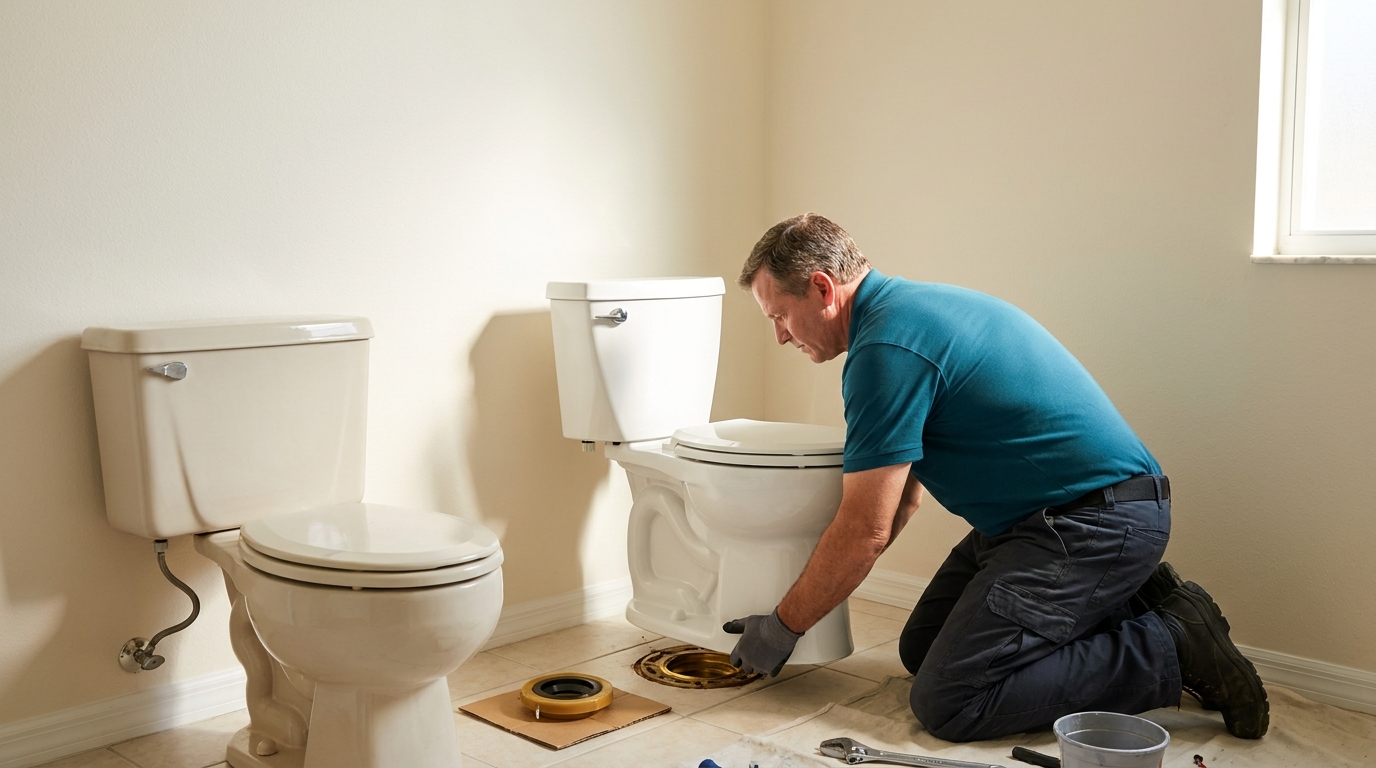
If you own your home and get water from one of six Tampa Bay utilities, replacing an old toilet with a WaterSense model is worth $40 to $200 back through the Tampa Bay Water Wise rebate program. Which end of that range you land on has almost nothing to do with how badly the old toilet is failing. It comes down to a date stamped on the inside of your tank, whether you keep the installation receipt, and how many gallons the new toilet uses per flush.
That’s the part almost nobody tells homeowners here. National articles about replacing a toilet quote a national price and stop. They don’t know that the water utility on this side of the bay will pay for a chunk of it, and they definitely don’t explain why a toilet made in 1993 is worth more to replace than the exact same toilet made in 1996.
How much is the toilet rebate in Tampa Bay?
The program publishes three tiers, and they stack on the same basic swap.
The base rebate is $40 for installing a WaterSense labeled toilet in a home you own. That’s the floor, and it’s what you get if you buy the toilet, install it yourself, and submit the receipt for the fixture alone.
The rebate rises to $100 when you include proof of installation. The program accepts either a paid receipt for the installation labor or a before-and-after photo showing the old toilet and the new one. If a plumber does the work, the invoice is the proof, which means hiring the job out moves you up a tier rather than costing you the rebate.
The top tier is up to $200, and there are two separate ways to reach it. One is replacing a toilet manufactured in 1993 or earlier. The other is installing a WaterSense toilet rated at 0.8 gallons per flush, the most efficient category on the market.
One caution worth taking seriously. The enhanced amounts have run on limited purchase windows in past program cycles, and the terms are set by the program rather than by any plumber. Confirm the current amount on the application before you buy the fixture, not after. Utility incentive programs around plumbing work change and run out, so the number you read anywhere online is a starting point for a phone call rather than a promise.
Why 1994 is the line that decides your rebate
The 1993 cutoff isn’t arbitrary, and understanding it tells you roughly what your old toilet is costing you.
The Energy Policy Act of 1992 capped residential toilets at 1.6 gallons per flush for units manufactured on or after January 1, 1994. Before that federal standard took effect, a standard American toilet used 3.5 gallons per flush, and plenty of older ones used considerably more. So the 1993 line is really a proxy for water use. A pre-1994 toilet is presumed to be a 3.5 gallon fixture or worse, and swapping it saves the region far more water than upgrading a toilet that was already capped at 1.6.
A WaterSense labeled toilet uses 0.8 to 1.28 gallons per flush. Against a 1.6 gallon toilet that’s a modest improvement. Against a 3.5 gallon toilet from the 1980s it’s a reduction of roughly two thirds on every flush, every day, for as long as the fixture lasts. The rebate tiers are just the program paying in proportion to the water saved.
This matters for a decision a lot of Tampa Bay homeowners are already sitting on. A big share of the housing stock here predates 1994, particularly in St. Petersburg, Ybor, and the older Pinellas beach communities. If the original toilet is still in place in one of those homes, it’s in the top rebate tier by definition.
How do you find out how old your toilet is?
You don’t need a plumber for this, and it takes about a minute.
Lift the tank lid and set it somewhere safe on a towel. Look at the underside of the lid and at the back inside wall of the tank itself. Manufacturers stamp or mold the date of manufacture there, usually as a month and year. That stamp is the number the rebate program cares about, and Hillsborough County specifically requires a photo of it showing the date of manufacture of the old toilet as part of the application.
There’s a faster tell if you only want to know which side of the line you’re on. Toilets manufactured in 1994 or later usually carry an ink stamp reading “1.6 gpf” on the bowl itself, near the seat hinges or low on the side. If you find that stamp, the toilet is post-1994 and you’re looking at the $40 or $100 tier. If there’s no gallons-per-flush marking anywhere on the bowl, that’s a good sign you have a pre-standard fixture and should go find the date in the tank.
Take the photo while the lid is off. You’ll need it for the application, and it’s much harder to get after the old toilet is gone.
Who qualifies for a toilet rebate in Tampa Bay?
The eligibility rules are narrow enough to check in a couple of minutes, and worth checking before you shop.
You have to be an existing potable water customer of one of six utilities: the City of Tampa, the City of St. Petersburg, the City of New Port Richey, Pinellas County, Pasco County, or Hillsborough County. If you’re on a private well, you’re outside the program, because the rebate is funded to reduce draw on the public supply. Homes on well systems in rural Pasco and eastern Hillsborough often fall into this gap, and it’s the single most common reason an application gets rejected before it’s read.
You have to own the home. Single family houses, condos, mobile homes, and townhomes all qualify. Renters don’t, though a landlord can apply on a property they own.
The new toilet has to appear on the EPA WaterSense eligibility list. This is the one that catches people at the store, because plenty of perfectly good low-flow toilets aren’t WaterSense certified. Check the model number against the list before the box goes in the truck.
There’s a lifetime cap of two rebates per home. That’s per property, not per owner, so a home where a previous owner claimed two is done regardless of who lives there now.
Finally, the program is explicit that approval is at its own discretion and that submitting an application doesn’t guarantee one. Complete applications can take up to 30 days to process. Treat the rebate as a reimbursement you’re likely to get rather than a discount you can count on at the register.
What does a toilet replacement cost before the rebate?
Knowing the rebate is only useful against the real number.
A standard toilet installation in this market runs $300 to $550 in labor, which covers pulling the old unit, setting the new one on a fresh wax ring, and checking what’s underneath. That range doesn’t include the fixture itself. Comfort-height and accessibility models run a little higher because the fixture costs more, not because the work changes.
By comparison, a straightforward repair runs $125 to $250. That covers replacing a flapper, a fill valve, or a flush valve, parts and labor included. For a newer toilet with one failed part, repair is almost always the right call, and we’ve written separately about what common plumbing repairs actually cost here.
So the honest math on a pre-1994 toilet looks like this. Installation labor lands in the $300 to $550 band, the fixture is on top of that, and the rebate returns up to $200 of it. On the low end of the labor range with the top rebate tier, the utility is covering a meaningful share of the job. That’s a genuinely different calculation than the one a national replacement-cost article would hand you.
One more local factor belongs in the math. Tampa Bay water hardness runs roughly 11 to 17 grains per gallon across most of the metro, and that mineral load coats flappers and fill valves with scale. Internal toilet parts here often need replacing every three to five years instead of the seven to ten you’d see with softer water. If you’re on your third flapper in a decade on an original fixture, the repeat repairs are the real cost, and a whole-home softener addresses the cause rather than the symptom. We’ve covered whether a softener is worth it in this region in more detail.
How do you actually claim it?
Applications go through the regional portal at tbw.conservationrebates.com, which is where the individual county programs were consolidated. Hillsborough County’s own page now points there directly rather than running a separate process.
Two timing rules matter, and they don’t agree with each other, so read this part carefully. The regional program says applications must be submitted within one year of purchase. Hillsborough County’s own toilet rebate page says the toilet must have been purchased within the past 90 days before you submit. Those are different windows, and which one applies to you depends on your utility and on the program cycle you’re in. The safe move is to apply on the tighter timeline, inside 90 days, and to call your utility if you’re outside it rather than assuming the longer window covers you.
Keep three things from the job: the receipt for the fixture, the receipt or invoice for the installation labor, and the photo of the manufacture date inside the old tank. Those three documents are what separate a $40 rebate from a $200 one.
What the rebate won’t do
Worth being straight about the limits, because a rebate is not a coupon.
It won’t help with a repair. The program pays for replacing a fixture with a more efficient one, so fixing a running toilet, however sensible, earns nothing from it. It won’t apply to a toilet that isn’t on the WaterSense list. It won’t apply to a rental you don’t own, or to a home that has already claimed its two.
It also won’t fix what’s underneath. If the toilet rocks, leaks at the base, or sits on a corroded flange, that’s a separate problem from the fixture on top of it, and setting a shiny new toilet on a failed flange just moves the same leak forward a year. We’ve written about what flange failure looks like in older Tampa Bay homes, and it’s worth reading before a replacement rather than after. The same goes for a toilet that’s been quietly leaking into a slab, which is a leak detection job rather than a fixture swap.
And to be clear about our role: we’re a referral network that connects Tampa Bay homeowners with local plumbers. We don’t process rebates and we don’t decide who gets one. Tampa Bay Water Wise does. What we can do is make sure the installation is done right and that you leave with the paperwork the application asks for.
Frequently asked questions
How much is the toilet rebate in Tampa Bay?
Between $40 and $200. The base rebate is $40 for installing a WaterSense labeled toilet, $100 when you submit proof of installation, and up to $200 when you’re replacing a toilet manufactured in 1993 or earlier or installing a 0.8 gallon-per-flush model. Confirm the current amount on the application before buying, because the enhanced tiers have run on limited purchase windows in past cycles.
Which Tampa Bay utilities offer the toilet rebate?
Six of them: the City of Tampa, the City of St. Petersburg, the City of New Port Richey, Pinellas County, Pasco County, and Hillsborough County. You have to be an existing potable water customer of one of those. Homes on private wells don’t qualify, since the program exists to reduce demand on the public supply.
Where is the date of manufacture on a toilet?
Inside the tank. Lift the lid and check the underside of the lid and the back inside wall of the tank, where manufacturers stamp or mold a month and year. Hillsborough County requires a photo of that stamp with the application, so take it before the old toilet is removed.
Does hiring a plumber cost me the rebate?
No, it moves you up a tier. The $100 rebate requires proof of installation, and a paid invoice for installation labor is exactly that. Doing it yourself and submitting only the fixture receipt puts you at the $40 base instead.
Can I get a rebate for repairing my toilet instead of replacing it?
No. The program pays for replacing an inefficient fixture with a WaterSense model, so repairs earn nothing from it. That doesn’t make repair the wrong call. On a newer toilet with a single failed flapper or fill valve, a $125 to $250 repair still beats a full replacement.
How many toilet rebates can one house get?
Two, for the lifetime of the home. That cap follows the property rather than the owner, so if a previous owner already claimed two, the house is finished regardless of when you bought it.
Thinking about replacing an old toilet?
If your toilet predates 1994 or you’re on your third repair in a few years, a replacement is probably the cheaper path, and the rebate makes it cheaper still. Tampa Plumbing Pro connects homeowners across the metro with local plumbers who handle toilet repair and installation, and the network covers all of Hillsborough, Pinellas, and Pasco with someone reachable around the clock. That includes the older housing stock in New Port Richey and the newer builds out in Brandon, where the rebate math runs differently because the fixtures are already post-standard.
Call (813) 590-0625 and we’ll get you a plumber who’ll pull the old unit, check the flange underneath, and leave you the invoice the rebate application asks for. If you’re updating other fixtures at the same time, faucet and fixture installation is worth bundling into the same visit.