A sewer line problem rarely starts as an obvious emergency. It usually shows up as a handful of smaller, easy-to-dismiss issues first, a slow drain here, a bad smell there, until enough of them stack up that something backs up into the house. Here is what actually points to a real sewer line problem in a Tampa Bay home, and what tends to be nothing.
Multiple slow drains at once
One slow drain usually means a local clog in that specific fixture. Multiple slow drains across the house, especially the lowest fixtures like a tub or a downstairs toilet, point to a blockage further down the line where everything eventually connects. If your kitchen sink, your shower, and your washing machine all seem sluggish around the same time, that pattern is worth a real look rather than another bottle of drain cleaner. A standpipe that overflows on its own is a different story, covered in our guide to a washing machine drain overflow.
Gurgling sounds from drains or toilets
A gurgling sound when you flush a toilet or run a sink, especially if it happens in a different fixture than the one you are using, usually means air is trapped in the line because something downstream is partially blocked. It is one of the earliest and most reliable signs of a developing sewer line problem, and it often shows up weeks before an actual backup.
Sewage odor inside or outside the home
A persistent sewage smell, whether it is near a floor drain inside or out in the yard near where the line runs, is not something to wait out. That smell means gas is escaping somewhere it should not be, either from a cracked line or a failing joint, and it tends to get worse, not better, on its own.
A noticeably greener patch of lawn
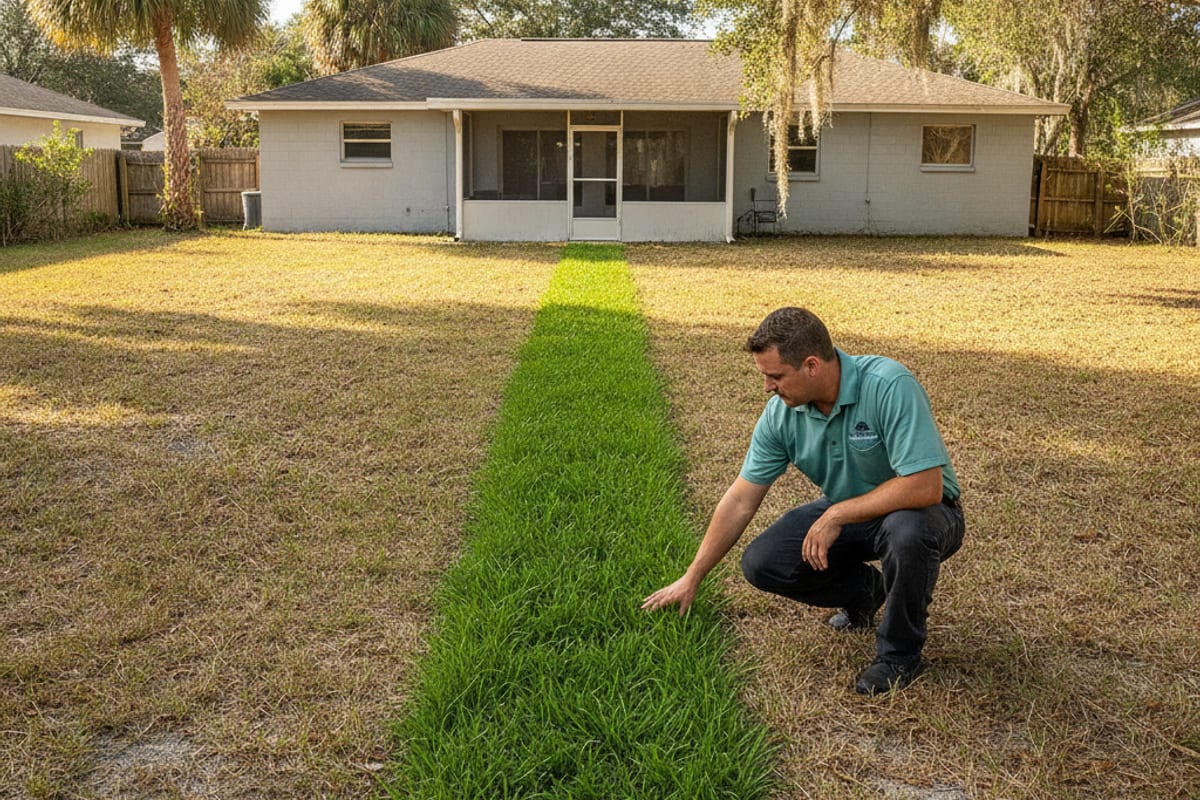
This one surprises people, but a strip of unusually green, lush grass running across the yard, especially in an otherwise consistent lawn, can mean a sewer line underneath is leaking and effectively fertilizing that section of soil. Combined with any of the other signs on this list, a green patch tracing a straight line across the yard is worth pointing out when you call.
Backups in the lowest fixture in the house
The lowest drain in your home, typically a basement floor drain if you have one, or the lowest-level tub or toilet, is usually the first place a full sewer line blockage shows itself, since it is the point of least resistance for backed-up water and waste. A backup specifically at your lowest fixture, especially one that happens when you run water elsewhere in the house, is one of the clearest signs of a main line problem rather than a single-fixture clog.
Why cast-iron and tree roots cause most of this in Tampa Bay
The two most common root causes we see across Seminole Heights, Tampa Heights, and Temple Terrace are cast-iron pipe that has corroded through after 50-plus years in the ground, and tree roots working into a joint on an older clay or cast-iron line. Oak-canopy neighborhoods like Palma Ceia and Hyde Park see root intrusion at a rate that is close to guaranteed over a long enough timeline, since roots are drawn toward the moisture and nutrients inside a sewer line and will exploit any small gap in an aging joint.
Sandy soil across the region adds another factor: bellies, or low spots where a line has settled slightly, where waste collects and clogs recur in the same spot even after a supposedly clean-out. A single spot repair on a line failing in multiple places usually means dealing with the same symptoms again within months, which is why real diagnosis matters before committing to a repair plan.
How a real diagnosis actually works
Before recommending anything, the plumbers we send run a camera down the line to see exactly what is happening, root intrusion, a cracked or corroded section, a belly collecting waste, or a joint that has separated. That footage tells you whether a targeted sewer line repair on one section makes sense, or whether the line’s overall age and condition point toward a longer trenchless replacement instead. After that diagnosis, published ranges for the next step live on sewer line replacement cost in Tampa: $6,000 to $15,000 for replacement, and $2,500 to $6,000 for a targeted trenchless repair. Guessing based on symptoms alone, without seeing the actual line, is how homeowners end up paying for a repair that does not address the real problem.
What are the first signs of a sewer line problem?
Multiple slow drains at once, gurgling sounds from toilets or sinks, and a persistent sewage smell are usually the earliest signs, often showing up weeks before an actual backup. Catching these early usually means a smaller, less invasive repair.
Can tree roots really break through a sewer pipe?
Yes, especially into an existing crack or a separated joint on an older clay or cast-iron line. Roots are drawn to the moisture and nutrients inside the pipe and will grow directly into any small opening, gradually widening it until it causes a partial or full blockage.
Do I need a full sewer line replacement or just a repair?
It depends entirely on what a camera inspection shows. An isolated crack or root intrusion in one section often only needs a targeted repair. A line with corrosion or bellies in multiple spots, especially cast iron original to a home built before the 1970s, more often points toward a full or trenchless replacement being the better long-term call.
Get a real look before you guess
If more than one of these signs sounds familiar, do not wait for a full backup to call. Camera inspection tells us exactly what is happening in your line before we recommend anything. Call Tampa Plumbing Pro at (813) 590-0625, or see our full sewer line repair page for pricing and what the repair process looks like.