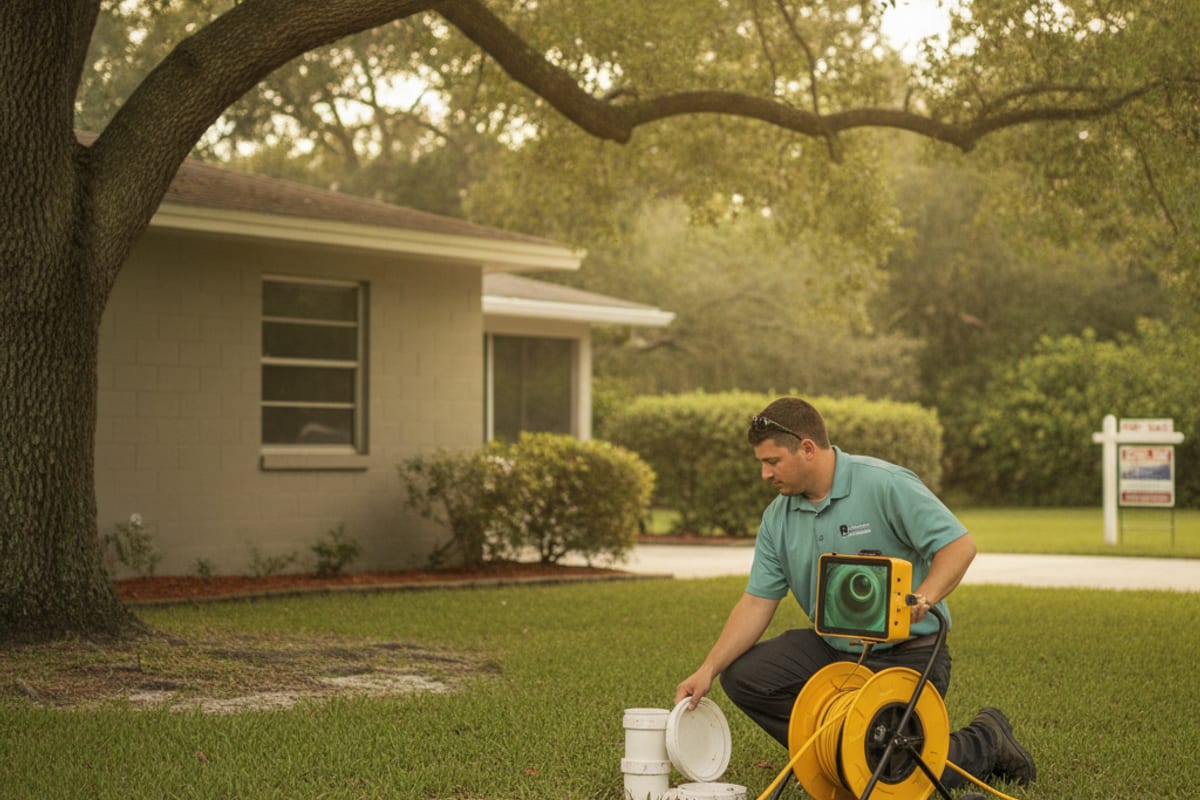
A licensed plumber can run a sewer camera in Tampa Bay, and a Florida home inspector can offer one as an add-on. A standard Florida home inspection does not include the buried lateral. Sewer scope inspection cost then runs $150 to $500. The lower end usually applies when the camera is bundled with other work. A standalone scope sits toward the higher end.
How much does a sewer scope inspection cost in Tampa Bay?
A Tampa Bay sewer scope costs $150 to $500. The difference depends largely on whether it is bundled into other plumbing work or purchased as a standalone inspection.
The camera fee typically applies toward a repair that follows. That credit isn’t automatic, so confirm it in the written quote before authorizing work.
The inspection can be modest beside the repair it may uncover. A targeted trenchless repair on one damaged section runs $2,500 to $6,000. A full sewer line replacement runs $6,000 to $15,000.
| Service or repair | Published cost | What it addresses |
|---|---|---|
| Sewer scope inspection | $150 to $500 | A camera shows the condition inside the buried lateral. |
| Single-fixture drain clearing | $150 to $350 | Clearing restores flow when one fixture has a local blockage. |
| Main-line hydro-jetting | $350 to $700 | Pressurized water removes buildup inside the main drain. |
| Targeted trenchless repair | $2,500 to $6,000 | One damaged section is repaired without replacing the entire line. |
| Full sewer line replacement | $6,000 to $15,000 | The failed lateral is replaced when isolated repair isn’t enough. |
Our Tampa sewer line replacement cost guide explains what moves the larger repair number. Pipe length, access, depth, and the repair method all affect the work involved.
What is a sewer scope inspection?
A sewer scope is a camera examination of the buried drain line. The operator feeds a flexible camera through an accessible cleanout and watches the pipe interior on a monitor.
The camera can reveal corrosion, cracks, root intrusion, separated joints, obstructions, and standing water. Standing water can mark a low section, often called a belly, where the pipe no longer drains as intended.
A scope gives you visual evidence instead of a guess based on symptoms. The footage helps separate a removable blockage from structural pipe damage.
This distinction matters before choosing drain cleaning or sewer line repair. Cleaning can remove an obstruction. It won’t rebuild a cracked, collapsed, or badly separated pipe.
Why doesn’t a standard Florida home inspection include the sewer lateral?
Florida defines home inspection services as a limited visual examination of readily accessible systems. A buried lateral between the house and street falls outside that required visual scope.
The Florida statutory definition of home inspection services includes the plumbing system. It also limits that examination to installed components that are readily accessible.
Florida’s plumbing standard of practice for home inspectors requires inspection of visible and readily accessible plumbing. It covers interior supply piping, fixtures, drains, vents, water-heating equipment, and main shutoff valves. It doesn’t require the inspector to determine whether waste disposal is public or private.
That last point matters around Tampa Bay. The standard inspection doesn’t have to establish whether a property uses city sewer or septic.
“Not required” doesn’t mean “not allowed.” The general standards of practice permit inspectors to offer additional services. They also don’t limit work in areas where the inspector has special knowledge or qualifications.
A home inspector may offer a sewer scope as an add-on. A plumber may also perform it separately. Review the services listed in your inspection agreement instead of assuming the camera is included.
What can a scope find in an older Tampa Bay home?
A scope can expose pipe conditions hidden beneath Tampa Bay yards and slabs. The most useful local clues are the home’s age, drainage history, and surrounding trees.
Homes built before 1975 in Tampa and St. Petersburg commonly have cast-iron drain lines. Cast iron corrodes from the inside and can develop bellies. The outside may look intact while the usable opening narrows within.
That risk deserves attention around older St. Petersburg plumbing. Our guide to cast-iron pipe failure in St. Petersburg explains how internal corrosion changes drainage.
Tree roots add another local pressure point. Seminole Heights, Hyde Park, Palma Ceia, Old Northeast, and Safety Harbor combine mature oak canopies with older laterals. Roots can enter through an existing joint or crack and expand inside the line.
Tampa Bay homes also sit mostly on slab foundations over sandy soil. Shifting soil stresses buried laterals and their connections. The camera can show an offset joint or low section that isn’t visible from the yard.
A buyer looking in Seminole Heights may face both older pipe and mature roots. Our guide to sewer line problems in older Tampa homes covers those failure patterns in more detail.
When is a sewer scope worth paying for?
A sewer scope is most useful when hidden pipe condition could change your repair budget. It gives a buyer direct evidence while the contract’s inspection period is still open.
Check the inspection period written into your own contract. The timing isn’t universal, so schedule the scope early enough to receive the footage and any follow-up repair quote.
Older cast iron deserves attention because damage begins inside the pipe. Recurring main-line clogs also justify a closer look. Clearing the line restores flow, but the camera can show why the blockage returned.
Mature roots raise the value of seeing the entire run. So does a history of backups, slow drains across several fixtures, or previous sewer work without clear records.
A four-point inspection serves a different purpose. It reviews visible building systems. It doesn’t replace a camera examination of the buried lateral.
What happens if the camera finds a problem?
The next step depends on whether the footage shows buildup or damaged pipe. A blockage may call for cleaning, while a crack, offset, or collapse may require repair.
Ask the operator to identify the affected section and explain what appears on screen. Clear footage helps a plumber match the repair method to the actual failure.
A recurring clog may lead to main-line cleaning. One damaged section may support a targeted repair. Widespread corrosion or several failed sections may point toward replacement.
The plumbers we send can review the findings and explain the available sewer line repair options. If the break needs more precise locating, leak detection service can help define the repair area.
A camera finding isn’t the repair estimate itself. Access, pipe length, depth, and the chosen method still shape the final quote.
What doesn’t a sewer scope cover?
A sewer scope shows the inside of the drain lateral, not every plumbing system in the house. It doesn’t inspect water supply pipes, fixtures, the water heater, or concealed supply leaks.
That distinction matters in homes built from 1978 through 1995. Those years fall within Tampa Bay’s polybutylene window, but polybutylene is a supply-pipe issue. A sewer camera won’t inspect it.
A scope also can’t predict the exact date a worn pipe will fail. Florida’s home-inspection standard describes conditions visible at the inspection time and doesn’t include predictions of future conditions.
The camera doesn’t determine who owns a damaged section or who pays for repairs. Those questions depend on the property, agreements, and local utility boundaries.
Septic properties take a different path. A camera in the building drain isn’t a complete septic inspection. For homes in Land O’ Lakes, Odessa, Wesley Chapel, or rural Hillsborough, use a separate septic tank inspection guide and confirm the disposal system before making a repair decision.
We can line you up with a licensed and registered septic contractor through our septic service referral network. The septic pros we send handle tank and drain-field inspection work.
Frequently asked questions
Is a sewer scope included with a Florida home inspection?
A sewer scope isn’t part of Florida’s required visual inspection scope. The buried lateral isn’t readily accessible, so camera work is offered as an additional service when available.
Read the inspection agreement carefully. It should show whether a sewer camera inspection is included or quoted separately.
Is a sewer camera inspection the same as a sewer scope?
Yes, both terms describe using a camera to inspect the pipe interior. Buyers and home inspectors often say “sewer scope,” while plumbers may call it a sewer camera inspection.
Can a sewer scope find tree roots?
A sewer scope can show roots that have entered the pipe. It can also reveal the opening, failed joint, or cracked section allowing that growth.
Root intrusion deserves attention in oak-canopy neighborhoods such as Hyde Park and Seminole Heights. Removing roots restores space temporarily, but damaged pipe may still need repair.
Does a sewer scope inspect polybutylene pipes?
No. Polybutylene is a water-supply material, while a sewer scope examines the drain lateral. A separate plumbing evaluation is needed to assess supply piping.
Should I scope a sewer line before buying an older Tampa home?
A scope is useful when an older lateral could change your repair budget. Pre-1975 homes in Tampa and St. Petersburg commonly have cast iron that corrodes internally and develops bellies.
Order the service within the inspection period written into your contract. That leaves time to review footage and obtain a repair quote if needed.
Does a sewer scope replace a septic inspection?
No. A sewer scope doesn’t evaluate the septic tank, drain field, or the full onsite sewage system. A licensed and registered septic contractor should handle that separate inspection.
When to call us
Call when you’re buying an older Tampa Bay home, facing recurring main-line clogs, or reviewing troubling scope footage. We’ll match you with a licensed local plumber who can inspect the line and explain the repair choices. Call us at (813) 590-0625.