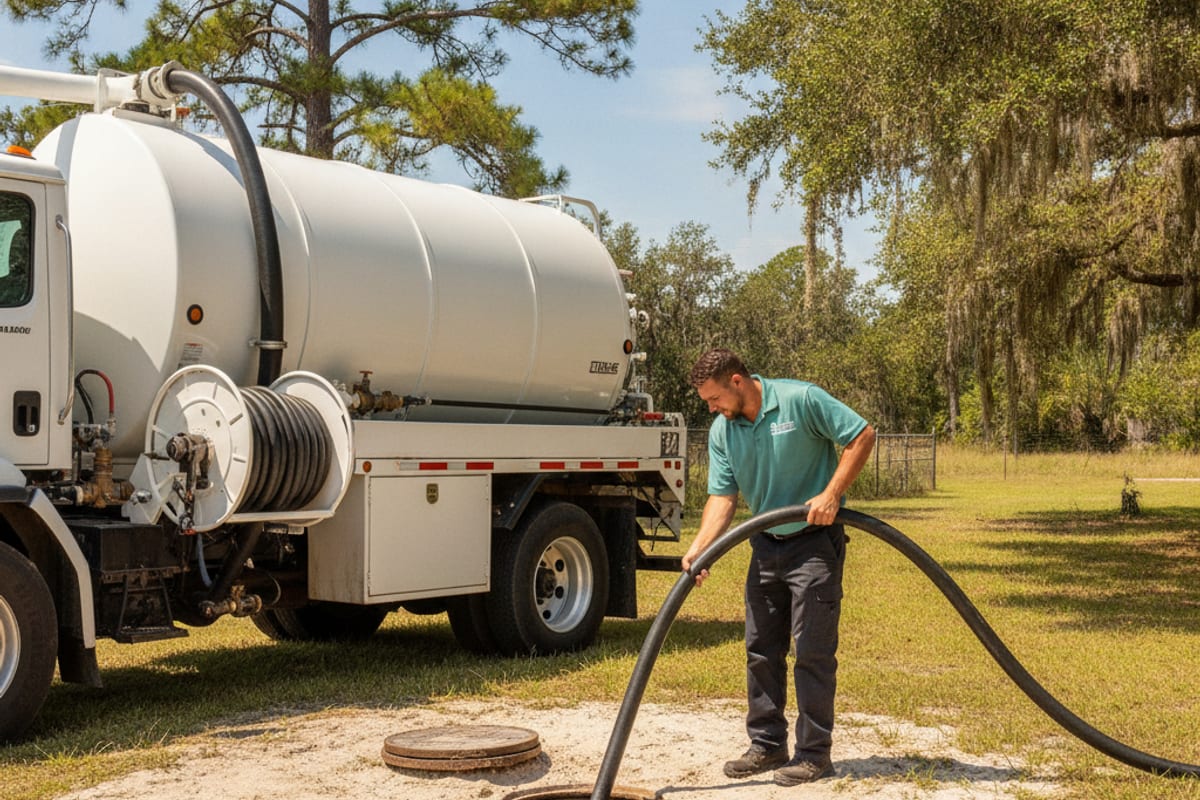
A routine septic tank pump-out runs $350 to $550 for an average residential tank in Hillsborough and Pasco County. Tanks that haven’t been pumped in more than five years, or ones buried under landscaping that need digging to access, land toward the higher end. Most pump-outs finish in a single visit.
We get a registered septic contractor out to pump the tank on the standard three to five year cycle, and they can answer emergency backups across the well-and-septic belt of Hillsborough and Pasco.
What does septic tank pumping cost?
A standard septic tank pump-out for an average residential system runs $350 to $550. That covers locating and accessing the tank, pumping the accumulated solids and liquid, and a basic check of the baffles and the inlet and outlet tees while the tank is open. The registered septic contractors we send give a firm number after they see the tank, not a phone guess, since access and tank condition vary enough between properties that a blind estimate isn’t honest.
What makes a pump-out cost more?
Access is the biggest swing factor. If the lid isn’t marked or has been covered by years of landscaping, locating and digging to reach it adds time before the actual pumping even starts. Tanks that haven’t been pumped in five years or more usually have more accumulated solids, which can mean a longer pumping process and, occasionally, signs of stress on the baffles or drain field that are worth flagging while they’re already there. Tank size matters too, with larger households or properties running bigger tanks that hold more volume.
How often does a septic tank actually need pumping here?
Most homes need pumping every three to five years, though households with garbage disposals, more people, or older, smaller tanks often need it closer to every two to three years. Sandy soil across Hillsborough and Pasco drains fast, which also lets grease and solids move toward the drain field faster than they should if the tank isn’t pumped on schedule, and heavy summer rain saturates the field further, which is why a tank that seemed fine in the spring sometimes backs up during a wet August. If it’s been more than three years since your last pump-out and you’re not sure exactly when that was, it’s worth a check regardless of whether anything seems wrong yet.
Routine pump-out versus emergency backup: does cost differ?
A scheduled pump-out on your own timeline, at $350 to $550, is the cheaper version of this conversation every time. An active backup, where the tank has already overflowed into the drain field or backed up into the house, often means pumping under worse conditions plus addressing whatever the backup damaged, which can include drain cleaning if solids pushed back into the house lines. Staying on a normal pumping schedule is the single easiest way to avoid ever needing the emergency version of this call.
What’s included in a standard pump-out?
Beyond the pumping itself, the registered septic contractors we send check the baffles and the inlet and outlet tees for damage, since a cracked baffle lets solids pass into the drain field where they don’t belong and shortens the field’s working life. They also read the drain field itself for standing water or unusual grass growth, which can be an early sign of a field under stress even when the tank pumping goes smoothly. If they find something worth flagging, you hear it plainly rather than waiting for it to become its own emergency call.
Does a pre-sale septic inspection cost extra?
Yes, a pre-sale inspection is a separate service from a routine pump-out, though the two are often booked on the same visit. A full inspection, checking tank condition, pump timing, baffle integrity, and drain field function with a written report for a buyer, seller, or lender, typically runs $150 to $300. A same-visit pump-out is a separate $350 to $550 line, not part of that inspection band. If you’re buying a home in Thonotosassa, Dover, San Antonio, or another rural pocket of Hillsborough or Pasco and the seller can’t produce recent septic history, an inspection before closing is worth the cost every time.
What happens if you skip pumping too long?
Skipping pumping is the single most common cause of septic failure. Solids that should have been pumped out eventually overflow into the drain field, clogging soil that was never designed to filter solid waste, and once a drain field is clogged this way, the fix isn’t another pump-out, it’s a drain field repair or replacement. This site does not publish a drain field construction price. The starting number is the state fee schedule, then a quote after a site evaluation. A $350 to $550 pump-out on schedule is cheaper than that path. Our drain field replacement cost post walks through those fees and the sizing rules, and our comparison of septic versus sewer in Tampa’s suburbs covers how septic systems work and what ongoing maintenance actually involves.
If you’re on well and septic together
Most septic properties out here also run on a private well rather than municipal water, and it’s worth having both systems checked on the same visit when one of them needs attention. A failing well pump and a neglected septic tank tend to get discovered around the same time on older rural properties, since both are easy to ignore until something stops working. Confirming your well and tank are properly separated per Florida Department of Health setback rules is also part of a thorough pre-sale check. For well-side plumbing, verify the plumber’s CFC plumbing license at myfloridalicense.com first. Septic pumping and inspection go to a licensed and registered septic contractor, which is a different Florida credential.
Frequently asked questions
How much does septic tank pumping cost in Tampa Bay?
A routine pump-out for an average residential tank runs $350 to $550 in Hillsborough or Pasco County, depending on tank size and access. Tanks that haven’t been pumped in over five years, or ones needing digging to access, usually land at the higher end.
How often should a septic tank be pumped in Pasco County?
Most homes need pumping every three to five years. Households with garbage disposals, more people, or older, smaller tanks often need it closer to every two to three years, and sandy soil plus heavy summer rain can stress a system faster than in other regions.
Why do some pump-outs cost more than others?
Access is the biggest factor. An unmarked lid buried under landscaping takes extra time to locate and dig up before pumping starts. Tanks that have gone longer than five years without service, or that show signs of baffle or drain field stress, also add time.
Does homeowners insurance cover septic tank pumping?
No. Routine pumping is standard maintenance, the same way mowing your lawn or cleaning your gutters isn’t a covered repair. Insurance may cover certain types of sudden damage in specific circumstances, but scheduled pump-outs are a homeowner cost, not a claim.
How much does a septic inspection cost for a home sale?
A full pre-sale inspection, covering tank condition, pump timing, baffle integrity, and drain field function with a written report, typically runs $150 to $300. A same-visit pump-out is a separate $350 to $550 line, not part of that inspection band.
What happens if I wait too long to pump my septic tank?
Excess solids eventually overflow into the drain field and clog the soil that filters wastewater. Once that happens, the fix is drain field repair or replacement, quoted after a site evaluation, far more than staying on a normal three to five year pumping schedule. This site does not publish a drain field construction price.
Get on a real pumping schedule
Call Tampa Plumbing Pro at (813) 590-0625 and we’ll get a registered septic contractor out to pump your tank, check the baffles and drain field while they’re there, and give you an honest read on when to expect the next one. We work the well-and-septic belt across Thonotosassa, Dover, and the rest of rural Hillsborough and Pasco County.