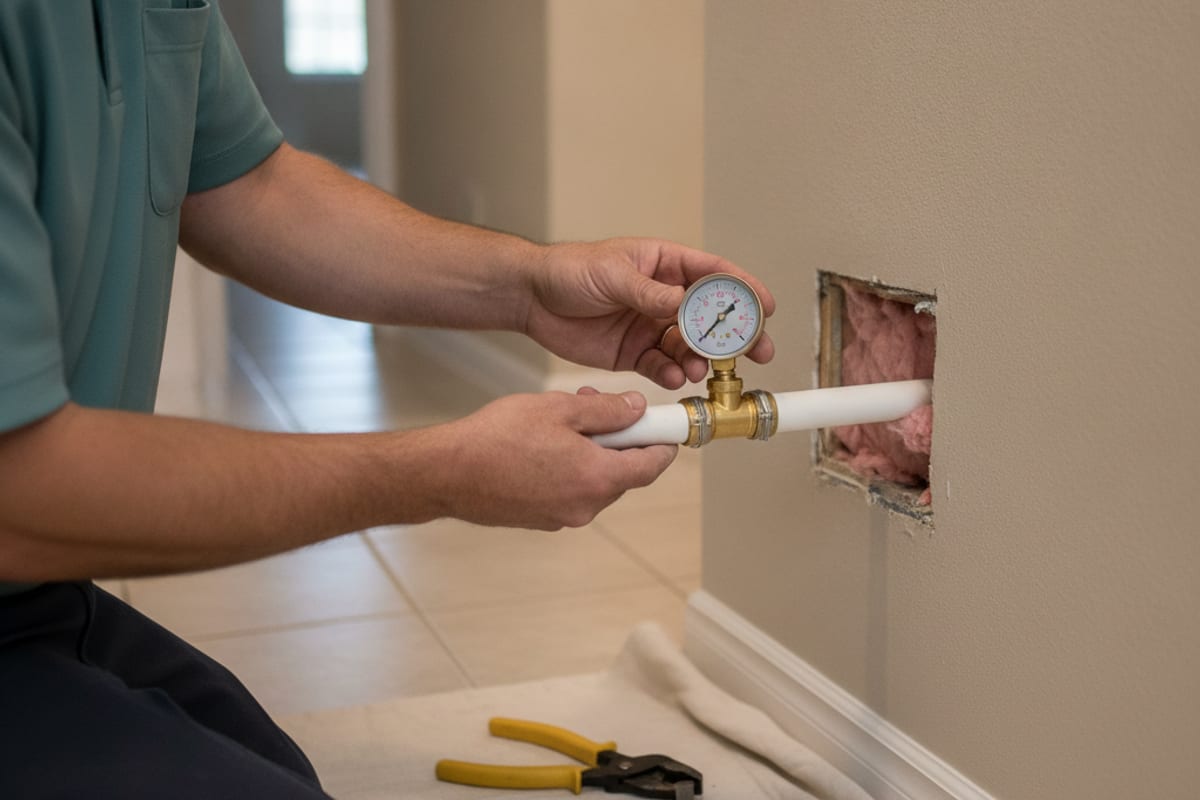
If your Tampa Bay home was built between 1978 and 1995, there’s a decent chance an insurance letter or a plumber’s inspection has already introduced you to the word polybutylene. Once a homeowner decides to move forward with a repipe, the next question is almost always the same: what actually happens once the crew shows up. A polybutylene repiping job isn’t as disruptive as most people picture, but it does follow a real sequence of steps, and knowing what’s coming makes the two to four days a lot easier to plan around.
Why polybutylene repiping keeps coming up in Tampa Bay
Poly-b was the go-to supply pipe during Tampa Bay’s biggest building boom, so it’s baked into thousands of homes across Carrollwood, Town ‘n’ Country, New Tampa, and similar-era subdivisions in Pinellas and Pasco. The pipe reacts badly with chlorinated water over decades, going brittle from the inside while looking fine from the outside. That’s the reason so many of these jobs start with an insurance non-renewal notice rather than a leak. A full repipe swaps every poly-b line for modern PEX, and once you’re past the decision to do it, the process itself is fairly predictable.
Before the crew shows up
A repiping job starts with a walkthrough, not a wrench. That means checking the attic access, confirming where the main line enters the house near the meter, and mapping which walls the branch lines run through to reach sinks, tubs, and the water heater. On a slab-on-grade home, which describes most of Hillsborough and Pinellas housing stock, this planning step matters more than it would on a home with a basement or crawlspace, since there’s no easy path except through the attic and down interior walls.
This is also the point to confirm who’s actually doing the work. Tampa Plumbing Pro connects homeowners with experienced, insured local crews rather than sending a single in-house technician, so before anyone starts cutting drywall, it’s worth verifying the assigned contractor’s CFC plumbing license at myfloridalicense.com. That’s a two-minute check and it’s the same paperwork your insurer will eventually want on file anyway.
The day-by-day walkthrough, permits, attic routing, and pressure test live on what happens during a polybutylene repipe. Dollar ranges live on polybutylene repiping cost in Tampa. A typical single-story PEX job runs $4,000 to $10,000.
Living in the house during a polybutylene repipe
Most families stay in the house for the whole job. Water gets shut off in short windows tied to whichever fixture is actively being worked on, so you’ll lose access to one bathroom or the kitchen sink for a stretch, but not the entire house at once. It helps to fill a couple of jugs of water each morning and plan showers around whichever bathroom isn’t currently open, especially if the crew is moving through a two-bathroom home in a single day.
Dust and drywall debris are the bigger annoyance than water access. Covering nearby furniture and closing doors to rooms not being worked on keeps the mess contained. Pets tend to find the noise and open walls stressful, so a lot of homeowners crate a dog or set up a cat in a closed-off room for the days the crew is actively cutting.
The paperwork from the finished job is what most insurers want before they’ll renew a policy that flagged poly-b. Keep the permit, the final inspection, and the invoice with the rest of the home file.
When a repipe turns into an emergency call
Sometimes homeowners are already mid-decision on a planned repiping job when a line fails on its own, usually a burst or split section that floods a wall or ceiling with no warning. That’s a different situation than a scheduled repipe, and it needs an emergency plumbing call rather than waiting for the next available slot. If you’re getting pressure from your insurer to repipe and you’re still deciding on timing, know that a planned job on your schedule is faster, cheaper, and a lot less stressful than an emergency one on the pipe’s schedule.
What you’re left with
At the end of a polybutylene repiping job, you should have PEX supply lines throughout the house, a written record of the work for your insurance file, and drywall patches ready for paint. Rebate programs and utility incentives around plumbing work change often and run out, so confirm what’s actually available at quote time rather than assuming a number you saw online still applies.
How long does a polybutylene repipe actually take?
The day-by-day sequence lives on what happens during a polybutylene repipe. Most single-story jobs still finish in a few days, with water off in short windows rather than all day.
Do I need to verify my plumber’s license before the work starts?
It’s a smart habit either way, and your insurer will likely want proof of who did the work. Verify any assigned contractor’s CFC plumbing license at myfloridalicense.com before work begins, and keep the documentation with your repipe paperwork.
Does a repipe fix a slab leak I already had?
Not directly, but it usually prevents the next one. If the leak was in a poly-b line, rerouting that section up through the attic during the repipe takes the failing material out of service for good, instead of leaving it under the slab to fail again somewhere else.
Get a straight answer for your house
Every home’s layout is different, and the only way to know exactly how many days and how many access points your specific repipe needs is to have someone walk the attic and count fixtures in person. Call Tampa Plumbing Pro at (813) 590-0625 and we’ll connect you with an experienced local crew, walk through the timeline for your house, and help you get ahead of an insurance deadline before it turns into a scramble.