Most homeowners who call about a polybutylene repipe already know the material is a problem. What they don’t know is what the job itself actually looks like once a crew is standing in their driveway. Repiping sounds like it should mean weeks of chaos, but for a typical single-story home in Carrollwood, Town ‘n’ Country, or New Tampa, the process is more contained than most people expect.
Here’s a real walkthrough of what happens between the first phone call and the final pressure test, so you know what you’re scheduling before a crew shows up. Cost and material live on the polybutylene repiping cost guide. A typical single-story PEX repipe runs $4,000 to $10,000. For PEX versus copper, see repipe cost in Tampa.
Before anyone touches a wall
The first visit isn’t demo day. A plumber walks the attic, checks under sinks, opens the meter box, and traces where the poly-b actually runs, since it can be in some branch lines and not others depending on past renovation work. On a slab-on-grade home, which describes most of Hillsborough and Pinellas County housing stock, they’ll also confirm whether any original lines run under the slab or if everything’s accessible from above.
That visit is also when the crew pulls the plumbing permit your county requires for a whole-house repipe. Hillsborough and Pinellas both require a permit and a final inspection for supply line replacement, and skipping that step is the fastest way to create a problem when you go to sell the house or file an insurance claim later. Ask to see the permit number once it’s pulled. If you’re vetting who’s doing the physical work, Florida keeps a public license lookup at myfloridalicense.com where you can confirm a CFC plumbing license before anyone starts cutting drywall.
Day one: access points and the water goes off in windows, not all day
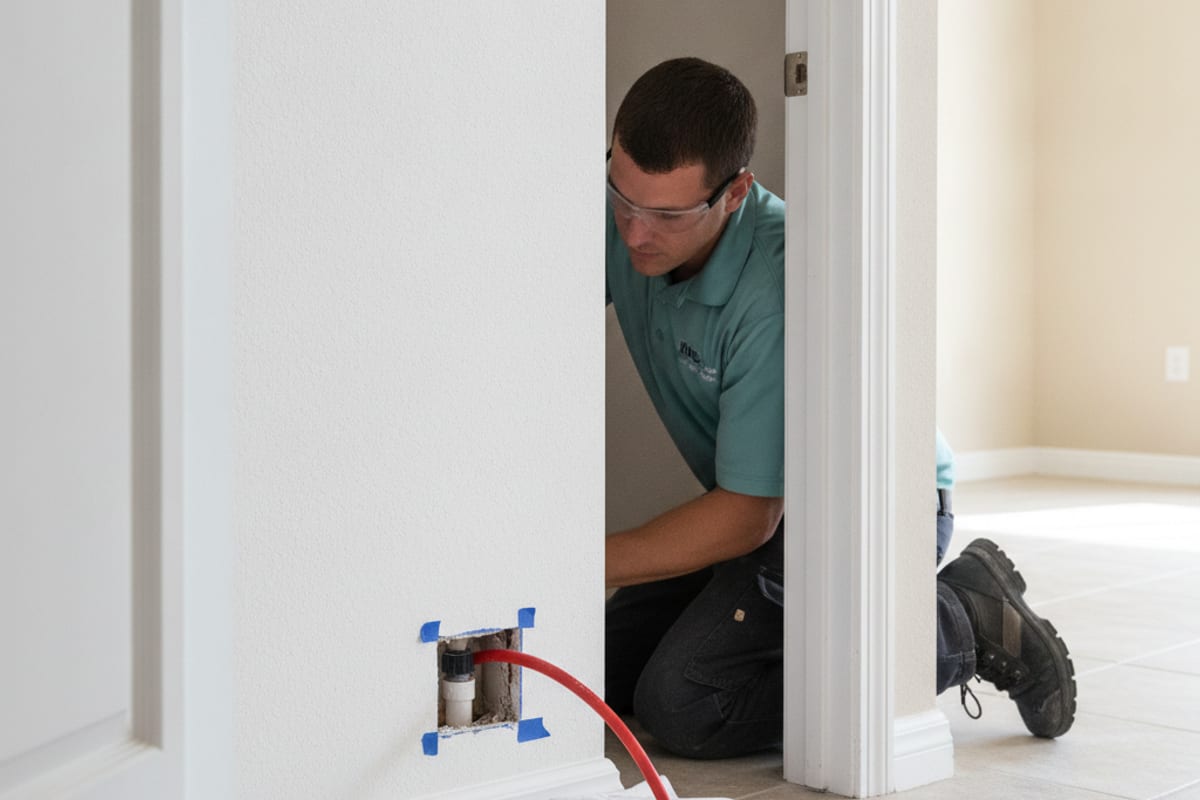
Most repipes start with the crew mapping out access points, small cuts in drywall near where new lines need to run, usually in closets, above baseboards, or behind fixtures rather than in the middle of a wall. On a typical 3-bedroom, 2-bath house this might mean 15 to 25 access holes total, which sounds like a lot until you see how small and targeted they are.
Water gets shut off in short windows while old poly-b sections come out and new PEX goes in, not for the entire day. Most families can still run the house normally in the evenings. The crew will tell you the schedule for each day so you’re not caught without water during dinner.
Days two through three: routing through the attic
This is where Tampa’s building style actually works in your favor. Because most homes here sit on a slab rather than a basement or crawlspace, the crew routes new PEX lines through the attic and down through interior walls instead of tunneling under the concrete. That’s faster, cheaper, and it avoids creating a future slab leak risk tied to old under-slab poly-b.
Each fixture gets its own line run from a central manifold, which is standard with PEX and different from how older copper systems branch off a single trunk line. That home-run design means if one line ever needs work down the road, a plumber can isolate it without shutting off water to the whole house.
Two-story homes, houses with tile floors covering old access points, or additions built at different times can add a day or two, since routing gets more complicated when the crew has to work around finished flooring instead of open attic space.
Day three or four: drywall patch and pressure test
Once every fixture, sink, tub, shower, water heater, and outdoor spigot is connected to new PEX, the crew pressure tests the whole system before closing anything up. This catches a bad connection before it’s hidden behind drywall, which matters far more than it sounds like it should. After the system holds pressure, they patch the access cuts and leave the drywall ready for paint. Painting itself typically isn’t included, so plan on a coat of touch-up paint once everything’s closed.
A county inspector signs off on the finished work before the permit closes out. Keep that final inspection paperwork with your other home records. It’s the exact documentation an insurance company will ask for if poly-b is what triggered a non-renewal notice in the first place.
What can stretch the timeline
A few things reliably add time to an otherwise straightforward repipe: two-story construction, a house with more than two full bathrooms, finished ceilings with no attic access in part of the home, and scheduling during hurricane season when emergency plumbing calls take priority on the board. If your insurance letter gave you a 30 to 60 day window to get the work done, call as soon as you get it rather than the week before the deadline. A straightforward single-story job usually books out two to three weeks depending on the season, and that window gets tighter from June through November.
Living in the house during the work
You don’t need to move out. Water is off in scheduled blocks, not continuously, and the crew works room by room rather than tearing the whole house apart at once. Pets and kids can stay home, though it’s worth keeping bathrooms with active work closed off during the day. Most families describe the actual disruption as closer to having a contractor over for a kitchen remodel than anything resembling an emergency repair.
How long will my water actually be off each day?
Water is shut off in short blocks while a specific section is being cut over, typically a few hours at a time, not for the full workday. The crew will walk you through the schedule each morning.
Do I need to move out during a repipe?
No. Most homeowners stay in the house for the full job. You’ll want to avoid using bathrooms or the kitchen sink during active work in that area, but the rest of the house functions normally.
Will you need to cut into tile or cabinets?
Rarely, and only if there’s no attic or wall-cavity access to a fixture any other way. Most access points go through drywall in closets or unfinished areas, not finished tile or cabinetry.
Do I need a permit to repipe my Tampa home?
Yes. Hillsborough and Pinellas County both require a permit and final inspection for a whole-house repipe. Ask to see the permit number before work starts and keep the final inspection paperwork for your records.
How soon can I give my insurance company proof the repipe is done?
Once the county inspector signs off, you’ll have the final documentation an insurer typically wants. Some carriers offer a discount or reverse a non-renewal notice once they have that paperwork on file, so call your agent as soon as the inspection closes out.
If you’re staring down an insurance deadline or you’ve just confirmed poly-b behind your walls, call Tampa Plumbing Pro at (813) 590-0625. We’ll walk your attic, give you a real timeline for your specific house, and connect you with an experienced, insured local crew that pulls the permit and does the work right the first time.