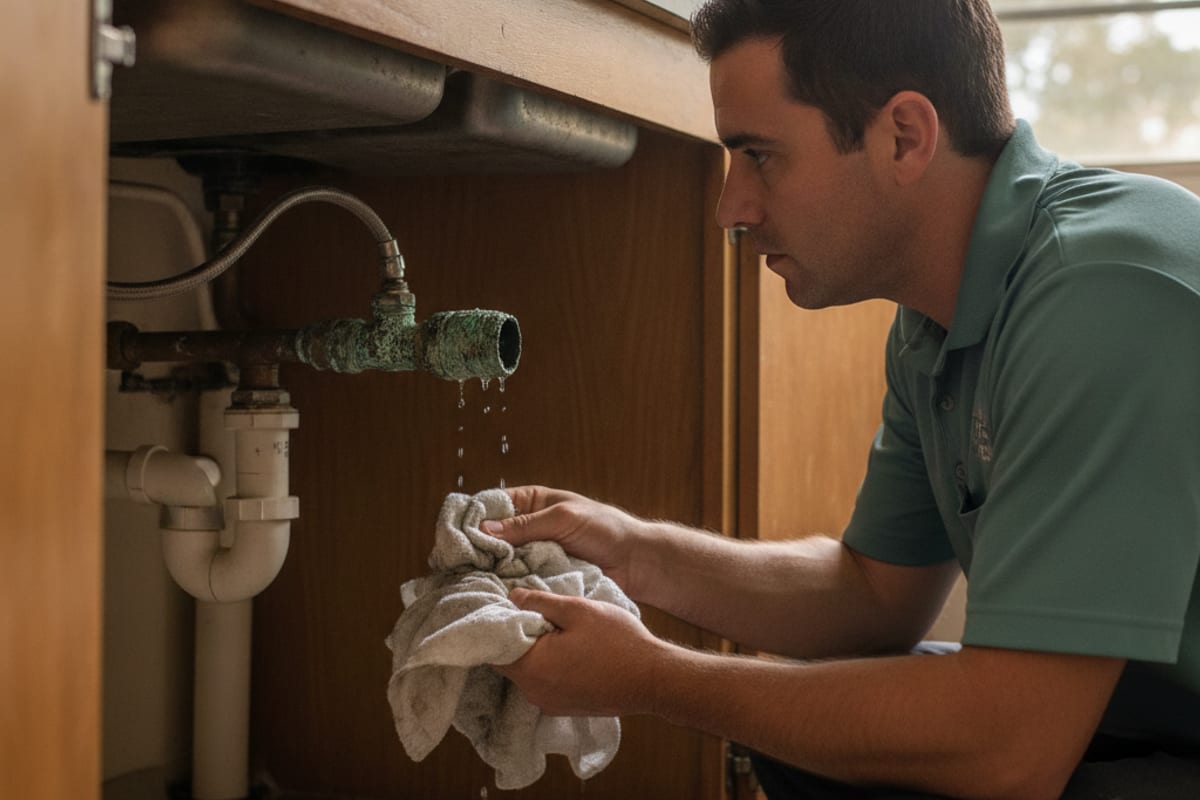
Pinellas Park’s plumbing challenges are different from Clearwater to the north or St. Petersburg to the west, even though they’re all in the same county. A lot of that difference comes down to when and how the homes were built. Pinellas Park grew fast in the 1950s and 1960s as a bedroom community, and most of those homes are still standing with much of their original plumbing infrastructure. Combined with Pinellas County’s consistently hard water and the area’s specific soil composition, you get a very particular set of recurring problems.
Galvanized pipes reaching the end of their run
If your Pinellas Park home was built between 1950 and 1985, it’s likely got galvanized steel water lines running from the meter into the house. Galvanized pipe lasts about 40 to 50 years before interior rust buildup narrows the opening enough to restrict flow, and a lot of those original lines are right on the edge of that timeline or past it.
You’ll notice it first as gradually declining water pressure, sometimes just in one fixture but often across the whole house. The rust buildup starts at the walls of the pipe and works inward, so the inside diameter gets smaller and smaller over years until you’re basically trickling water to the back bathroom. By the time pressure drops visibly, the pipe is usually already corroded enough that it’s not long before a rupture happens.
The only real fix is a full repipe with PEX or copper, which replaces the galvanized lines with modern supply lines that won’t rust from the inside. For what that costs here, see our guide to galvanized pipe replacement cost in Tampa Bay. This is one of the more valuable investments an older Pinellas Park homeowner can make. Ask your agent what they need to see before you assume a repipe changes the policy.
Hard water taking a toll on fixtures and appliances
Pinellas County water averages around 12 to 13 grains per gallon, putting it firmly in hard water territory. Pinellas Park sits right in that middle ground where you notice it, but not at the extreme that some rural Pasco County homes deal with.
Hard water means mineral deposits on faucet aerators, showerheads clogging with scale buildup, and most importantly, your water heater working harder than it should. Over time, that mineral scale inside the tank actually makes it less efficient, and the sediment at the bottom gets thicker and thicker. By the time the water heater gets old enough to replace anyway, you’re looking at one that’s already buried in mineral crud, which means a water softener on a new water heater installation starts your next chapter off on the right foot instead of repeating the problem.
Cast-iron drain lines corroding and cracking
Some of the older Pinellas Park homes, especially those on the southwest side toward the older neighborhoods, have cast-iron drain lines that have been in the ground since the 1960s. Cast-iron can last 75 to 100 years, but it starts to break down around year 60 or 65, particularly in acidic soil conditions like Florida’s sandy base.
When cast-iron drains start corroding, you get rust flakes inside the pipe that slow drainage, and eventually you get actual cracks. Those cracks let soil and roots intrude while also allowing sewage to seep into the surrounding ground where it contaminates anything nearby. A slow drain that keeps getting slower, recurring backups, or that distinctive sewage smell anywhere outside is a sign that your cast-iron is giving up.
The good news is that you don’t always need a full excavation. A lot of cast-iron damage can be repaired with trenchless pipe lining, where a new sleeve gets installed inside the old pipe without ripping up the yard. It’s not free, but it’s a lot less disruptive than traditional sewer line repair.
Slab leaks from movement and pressure
Pinellas Park’s sandy soil shifts more than clay-heavy soil in other regions, and that movement creates stress on water lines running under slab foundations. A slab foundation puts constant weight on those lines, and as the ground moves with the seasons and during heavy rain, the lines can crack or separate at the joints.
A slab leak usually shows up as soft or warm spots in your floor, a sudden spike in your water bill with no visible source, or moisture appearing in your carpet or along baseboards for no apparent reason. If you’re seeing any of those signs, you need a leak detection service to pinpoint where the water’s actually going before it undermines your foundation.
What to actually do about it
Get a camera inspection if your home is pre-1980. A sewer camera inspection tells you exactly what’s happening inside your drain and sewer lines. It’s usually under $400 and often prevents a sewage backup during hurricane season.
Have your water heater flushed once a year. If your water is hard, annual flushing gets a lot of the sediment out before it becomes a major efficiency problem, and it extends the life of the tank.
Check your water pressure. Normal household water pressure is 40 to 60 psi. If yours is consistently above 80 psi, have a plumber install a pressure regulator. High pressure stresses all your fixtures and supply lines.
Don’t ignore slow drains that keep getting slower. It’s almost never just hair. If one drain starts slow and stays slow despite plunging and drain cleaners, it’s time for a professional look.
If you see moisture anywhere that shouldn’t be there, don’t wait. Slab leaks get more expensive the longer they go. A small wet patch is cheaper to catch than foundation damage from a leak that sat.
FAQ
What’s the most common plumbing problem in Pinellas Park homes? Restricted flow from galvanized pipe corrosion and hard water mineral buildup. If your home is pre-1985 and you’ve noticed declining water pressure, that’s almost always the cause.
Do I really need a water softener? Not always. If you’re already dealing with mineral scale on faucets or showerhead clogs, or if you’re planning a new water heater, a softener will save you headaches. For most households, it’s optional but genuinely helpful.
How often should I have my sewer line inspected? At least once if you’re planning major work like foundation repair or yard landscaping. After that, every five to seven years if your home is pre-1980 and you want to catch problems early.
Can I use chemical drain cleaners on old Pinellas Park plumbing? No. Chemical cleaners are rough on galvanized, cast-iron, and older plastic lines. Mechanical cleaning (snaking or hydro-jetting) is safer and more effective.
Is a slab leak always fixable without digging? Not always. If the pipe is severely cracked or has multiple breaks, you might need a small excavation to repair the specific section. A plumber can determine that after a leak detection and camera inspection.